Nine out of ten marketers now say influencer marketing delivers a better return than traditional ads, according to recent industry surveys. Yet most brands still find creators the slow way: scrolling Instagram, sliding into DMs, and guessing whether a follower count is even real. That gap between demand and process is exactly why so many campaigns stall before they start.
This guide breaks down what influencer marketing actually is, how it works, and what separates a campaign that flops from one that sells out a product line. You will also see where manual outreach falls short and how a platform like Brand-O-fluence closes that gap with verified creators, real analytics, and secure payments.
By the end, you will know how to pick the right creator tier for your budget, what a healthy campaign workflow looks like from brief to payout, and which red flags separate a genuine creator from an inflated profile. Whether you are a brand running your first collaboration or a creator looking to land paid deals, the fundamentals in this guide apply either way.
Table of Contents
- What Is Influencer Marketing?
- Types of Influencer Marketing Campaigns
- Types of Influencers by Follower Size
- How Influencer Marketing Works: A Step-by-Step Process
- Benefits of Influencer Marketing for Brands
- Common Challenges in Influencer Marketing
- How Brand-O-fluence Simplifies Influencer Marketing
- The Future of Influencer Marketing in 2026 and Beyond
- Frequently Asked Questions About Influencer Marketing
- Conclusion
What Is Influencer Marketing?
Influencer marketing is a form of promotion where brands partner with people who have an engaged online following to showcase a product or service. Instead of a brand speaking directly to customers through an ad, a trusted creator speaks to their own audience on the brand’s behalf. That third-party endorsement carries more weight than a banner ad, because followers already trust the creator’s opinion.
At its core, this marketing approach works because people trust people more than they trust logos. A well-matched creator can turn a product launch into a genuine conversation instead of a broadcast. This is why the practice has grown from a niche tactic into a core part of most digital marketing budgets, with global spend on creator collaborations now running into billions of dollars each year.
The Origins of Influencer Marketing
Word-of-mouth recommendations are as old as commerce itself, but the modern version of influencer marketing took shape with the rise of blogging and YouTube in the mid-2000s. Brands noticed that a single trusted voice could move more product than a full-page magazine ad. Instagram, and later Reels and TikTok, turned this into a mainstream, always-on marketing channel.
Why Brands Use Influencer Marketing Today
Brands use influencer marketing because it reaches audiences that skip traditional ads entirely. A short-form video from a creator a customer already follows feels like a recommendation, not an interruption. It also lets brands test messaging quickly, since a single campaign can launch in days instead of the weeks a traditional ad shoot requires.
Influencer Marketing vs Traditional Advertising
Traditional advertising pushes a message at an audience. This approach instead invites an audience into a conversation they already trust. Traditional ads are measured mostly in impressions, while a creator-led campaign can be tracked through engagement, clicks, and direct conversions, giving brands a clearer read on what is actually working and where budget should go next.
Types of Influencer Marketing Campaigns
Not every creator campaign looks the same. The right format depends on your goal, whether that is awareness, direct sales, or a long-term brand association. Here are the formats brands use most often, and why each one suits a different stage of the marketing funnel.
Sponsored Posts and Reels
This is the most common type of influencer marketing: a brand pays a creator to feature a product in a post, Reel, or story. The content usually blends into the creator’s normal style so it feels native rather than promotional. Sponsored Reels in particular tend to drive strong reach because short video is favored by most platform algorithms.
Affiliate and Referral Campaigns
In affiliate-style influencer marketing, creators earn a commission for every sale made through their unique link or discount code. This model rewards performance rather than just reach, which makes it attractive for brands watching budgets closely. It also gives creators a reason to keep promoting a product well after the first post goes live.
Brand Ambassador Programs
Ambassador programs turn a one-off collaboration into an ongoing relationship. A creator represents a brand across multiple campaigns over months, which builds a much stronger association in the audience’s mind than a single sponsored post. This format works especially well for beauty, fitness, and lifestyle brands with recurring product launches.
Types of Influencers by Follower Size
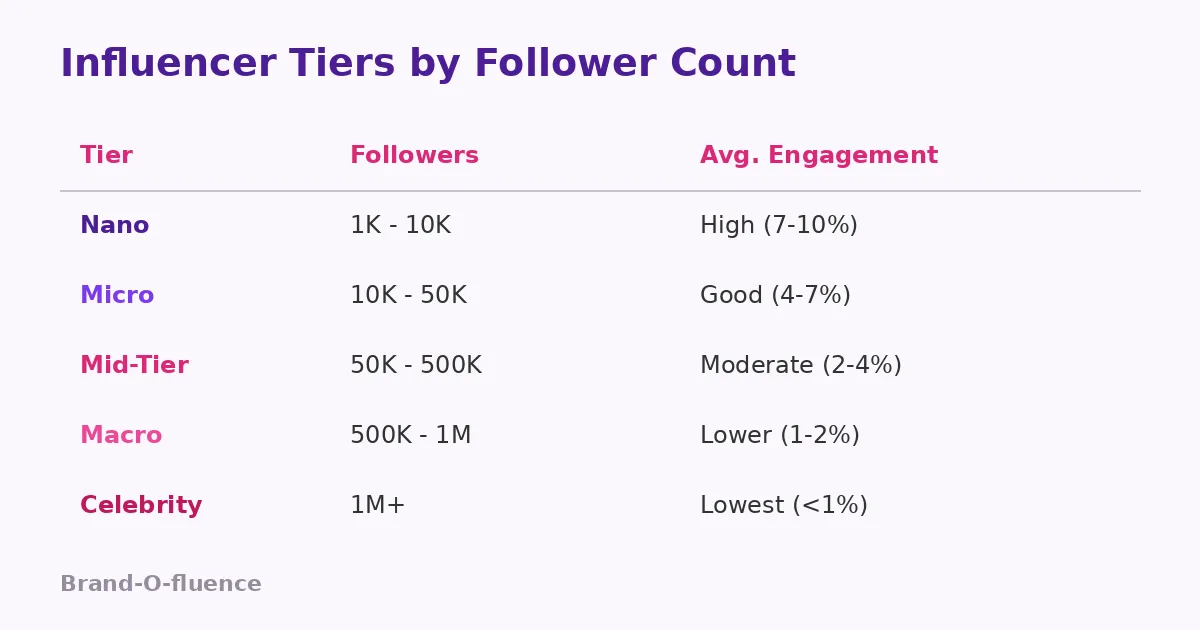
Creator marketing is often described by tier, based on how many followers a creator has. Bigger is not always better: smaller creators typically post higher engagement rates, while larger creators offer wider reach. Picking the right tier for your budget matters more than picking the biggest name available. The table below breaks down each tier.
| Tier | Follower Range | Typical Engagement Rate | Best For |
|---|---|---|---|
| Nano | 1K – 10K | 7% – 10% | Hyper-local, trust-driven campaigns |
| Micro | 10K – 50K | 4% – 7% | Niche audiences, better ROI |
| Mid-Tier | 50K – 500K | 2% – 4% | Regional brand awareness |
| Macro | 500K – 1M | 1% – 2% | National reach, product launches |
| Celebrity | 1M+ | Under 1% | Mass awareness, brand prestige |
Nano and Micro Influencers
Nano and micro influencers usually have the strongest engagement rates of any tier, because their followers feel like real friends rather than distant fans. Brands increasingly favor these creators for influencer marketing campaigns that need trust and conversions, not just reach. They also tend to charge far less per post than larger creators, which stretches a marketing budget further.
Mid-Tier and Macro Influencers
Mid-tier and macro influencers strike a balance between reach and relatability. They are useful when a brand needs to introduce a new product to a wider regional or national audience quickly. Engagement rates dip compared to smaller creators, but the sheer volume of views can still drive meaningful results.
Celebrity Influencers
Celebrity influencers bring mass visibility and instant recognition, which suits large product launches or rebrands. The tradeoff is cost and lower engagement rates relative to follower count. Most brands reserve celebrity partnerships for flagship campaigns rather than everyday creator marketing activity.
How Influencer Marketing Works: A Step-by-Step Process
A successful influencer marketing campaign follows a predictable process, even though the creative details change every time. Skipping steps is usually where campaigns go wrong, whether that means picking a creator without checking their audience or paying before content is approved.
Setting Campaign Goals and Budget
Every campaign should start with a clear goal, whether that is awareness, website traffic, or direct sales. The goal shapes which creator tier, platform, and content format makes sense. Budget should be set before outreach begins, so creator selection stays realistic. A campaign built around a vague goal like “get more followers” almost always underperforms one built around a specific, measurable target.
Finding and Vetting the Right Creators
This step is where most manual outreach efforts break down, since checking follower authenticity and audience demographics by hand takes hours per creator. Brands need to confirm real engagement, audience location, and past brand fit before committing budget. Skipping this step is the single biggest cause of wasted campaign spend, and it is the exact problem verified discovery platforms are built to solve.
Managing Content, Approvals, and Payments
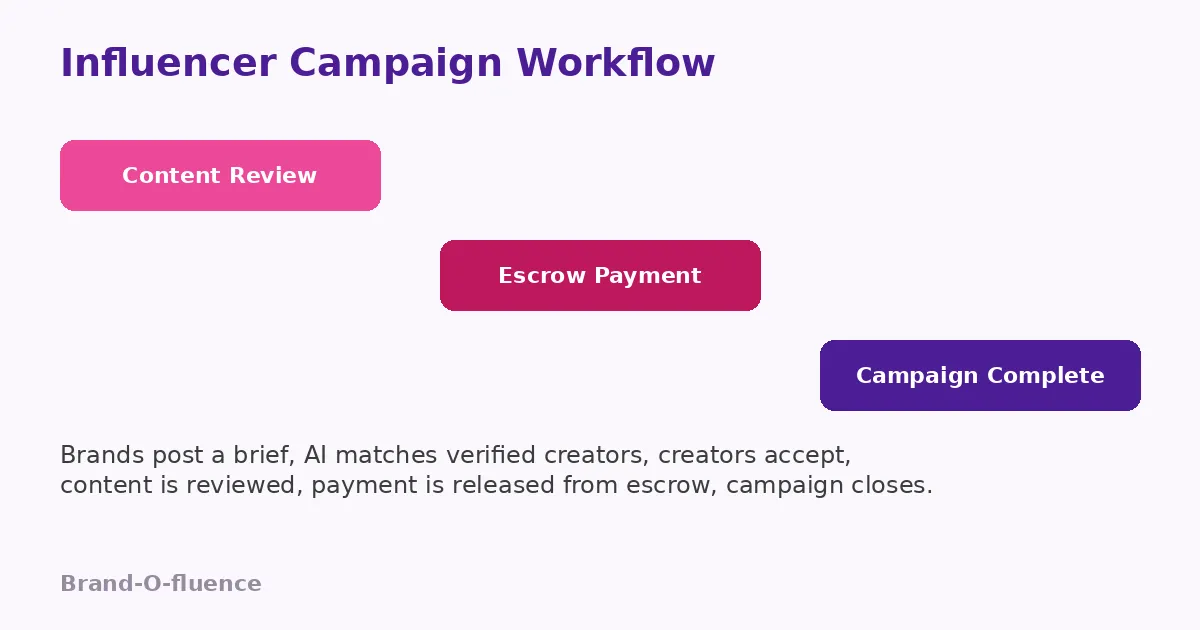
Once a creator is on board, the campaign moves through briefing, content drafts, approval rounds, and finally payment. Clear contracts and a secure payment method protect both sides. The full process typically follows these steps:
- Brand shares a campaign brief with goals, deliverables, and budget
- Creators are matched or shortlisted based on niche and audience fit
- Selected creators accept the collaboration and review the brief
- Creators submit content for brand approval before posting
- Payment is released once content goes live and is verified
- Brand reviews campaign performance and reach
Benefits of Influencer Marketing for Brands
When it is done well, influencer marketing consistently outperforms channels that feel less personal. Here is what brands gain when they get the strategy right.
Authentic Reach and Consumer Trust
Audiences trust a creator’s recommendation more than a branded ad, since the endorsement comes from someone they already follow by choice. This trust translates into higher click-through and conversion rates compared to standard display advertising. It is one of the main reasons creator marketing budgets keep growing year over year, even as brands cut spend in other channels.
Better ROI Than Traditional Advertising
Influencer marketing often costs less per engagement than TV, print, or even paid social ads, especially when working with micro and nano creators. Brands can also test multiple creators with smaller budgets before scaling up what works. That flexibility makes it easier to prove ROI before committing to a larger spend.
Access to Niche and Local Audiences
Creators build communities around specific interests, cities, and lifestyles that broad advertising simply cannot target as precisely. A fitness brand can reach exactly the runners, lifters, or yoga practitioners it wants, in exactly the cities it wants. This precision is one of the clearest advantages this channel has over mass-market ads, and it is nearly impossible to replicate with a single national campaign.
Some of the most common benefits brands report from a well-run influencer marketing strategy include:
- Faster campaign turnaround compared to traditional ad production
- Stronger engagement rates, especially with micro influencers
- Content that can be reused across a brand’s own social channels
- Direct feedback on product reception from real audiences
- Lower cost per engagement than most paid advertising formats
Common Challenges in Influencer Marketing
This space is not risk-free. Brands that skip due diligence often run into problems that cost both money and trust, and most of these issues trace back to the same root cause: a lack of verified data.
Fake Followers and Bot Engagement
Follower counts can be bought, and engagement can be faked through bots and engagement pods. A brand that pays for reach without verifying real engagement rates ends up with a campaign that looks good on paper but delivers nothing. This is consistently ranked as the top concern brands raise about creator partnerships.
Inconsistent Campaign Tracking
Many brands still track campaign results through screenshots sent by creators, which are easy to inflate or misreport. Without a direct data connection, brands are left guessing at real reach, impressions, and audience quality. That makes it hard to compare creators fairly or prove ROI to leadership, which in turn makes it harder to justify a bigger budget next quarter.
Payment and Contract Risks
Paying a creator upfront risks the brand’s money if content is never delivered. Paying only after posting risks the creator’s payment if a brand delays or refuses to pay. Both sides need a payment structure that protects them, which is where escrow-based systems come in.
How Brand-O-fluence Simplifies Influencer Marketing
Manual influencer marketing, built on spreadsheets, DMs, and screenshots, does not scale. Brand-O-fluence is built as a verified creator discovery, analytics, campaign management, and escrow payment platform, so every step above happens inside one system instead of across ten different apps.
AI-Powered Creator Discovery
Instead of scrolling Instagram for hours, brands can search Brand-O-fluence by niche, city, follower count, platform, and engagement rate. AI matching surfaces creators who genuinely fit a brand’s audience, cutting discovery time from days to minutes.
Verified Analytics and Human Review
Brand-O-fluence pulls real engagement, reach, audience demographics, and historical performance directly through the Instagram Graph API, so brands see verified data instead of screenshots. Every creator also goes through human review and monthly audits to catch fake followers and bot engagement that automated tools alone can miss.
Secure Escrow Payments
Payments on Brand-O-fluence sit in escrow until content is posted and verified. The brand’s money stays protected until deliverables go live, and the creator’s payment is guaranteed once the work is done. This single change removes most of the payment disputes that plague manual creator deals, and it is paired with GST-ready invoicing so brands can close campaigns without a finance headache.
Consider a Jaipur-based D2C skincare brand launching a new serum. Using Brand-O-fluence, the brand filters for verified fitness and skincare creators in Bengaluru with engagement rates above 5%, reviews their audience demographics, sends a brief, and completes the entire campaign, from creator acceptance to payout, in under a week.
The Future of Influencer Marketing in 2026 and Beyond
This industry keeps evolving as platforms, audiences, and technology change. A few trends are shaping where it goes next, and brands that adapt early tend to capture the best creator partnerships before competitors catch on.
AI Creator Matching Becomes Standard
AI-driven matching is quickly becoming the default way brands find creators, replacing manual searches with data-backed shortlists. This speeds up campaign planning while improving audience fit, since matching considers engagement quality, not just follower count.
Micro and Nano Creators Keep Rising
Brands are shifting more budget toward micro and nano influencers because of stronger trust and better cost efficiency. Expect creator marketing budgets to keep splitting across more, smaller creator partnerships rather than a handful of large ones.
Regional and Vernacular Content Growth
Regional language content is growing fast across India’s creator economy, as brands look beyond metro-only campaigns. Strategies that once focused only on English-speaking, urban creators are expanding into regional creators who reach smaller cities and towns with genuine local trust. Together, these shifts mean the brands that win in 2026 will be the ones that treat creator partnerships as a data-driven discipline, not a one-off experiment.
Frequently Asked Questions About Influencer Marketing
What is influencer marketing in simple terms?
Influencer marketing is when a brand pays or partners with a social media creator to promote a product to that creator’s audience. The creator’s existing trust with followers helps the brand’s message land more naturally than a traditional ad would.
How much does influencer marketing cost?
Costs vary widely by tier. Nano and micro influencers often charge a few thousand rupees per post, while macro and celebrity creators can charge lakhs for a single collaboration. Budget should match campaign goals, audience size needed, and expected engagement quality, rather than simply chasing the biggest follower count available.
Is influencer marketing effective for small businesses?
Yes, especially with micro and nano influencers who charge less and often deliver higher engagement rates than bigger creators. Small businesses can run focused, local influencer marketing campaigns without needing celebrity-level budgets to see real results, since a well-matched local creator often outperforms a distant, expensive one.
How do you measure influencer marketing ROI?
ROI is measured through reach, engagement rate, click-throughs, and conversions tied back to the campaign, not just follower count. Verified analytics tools make this far more accurate than relying on creator-reported screenshots, giving brands a real basis for deciding which partnerships to repeat.
How do you find trustworthy influencers?
Look for verified engagement rates, real audience demographics, and past campaign performance rather than follower count alone. Platforms with human verification and audience insight tools make it much easier to spot fake followers before you pay, instead of discovering the problem after the campaign has already launched.
Conclusion
Influencer marketing works because it replaces a broadcast message with a recommendation from someone an audience already trusts. The brands that win at it treat creator selection, verification, and payment as seriously as the creative itself, instead of leaving it to guesswork and screenshots.
by
Tags:
Leave a Reply