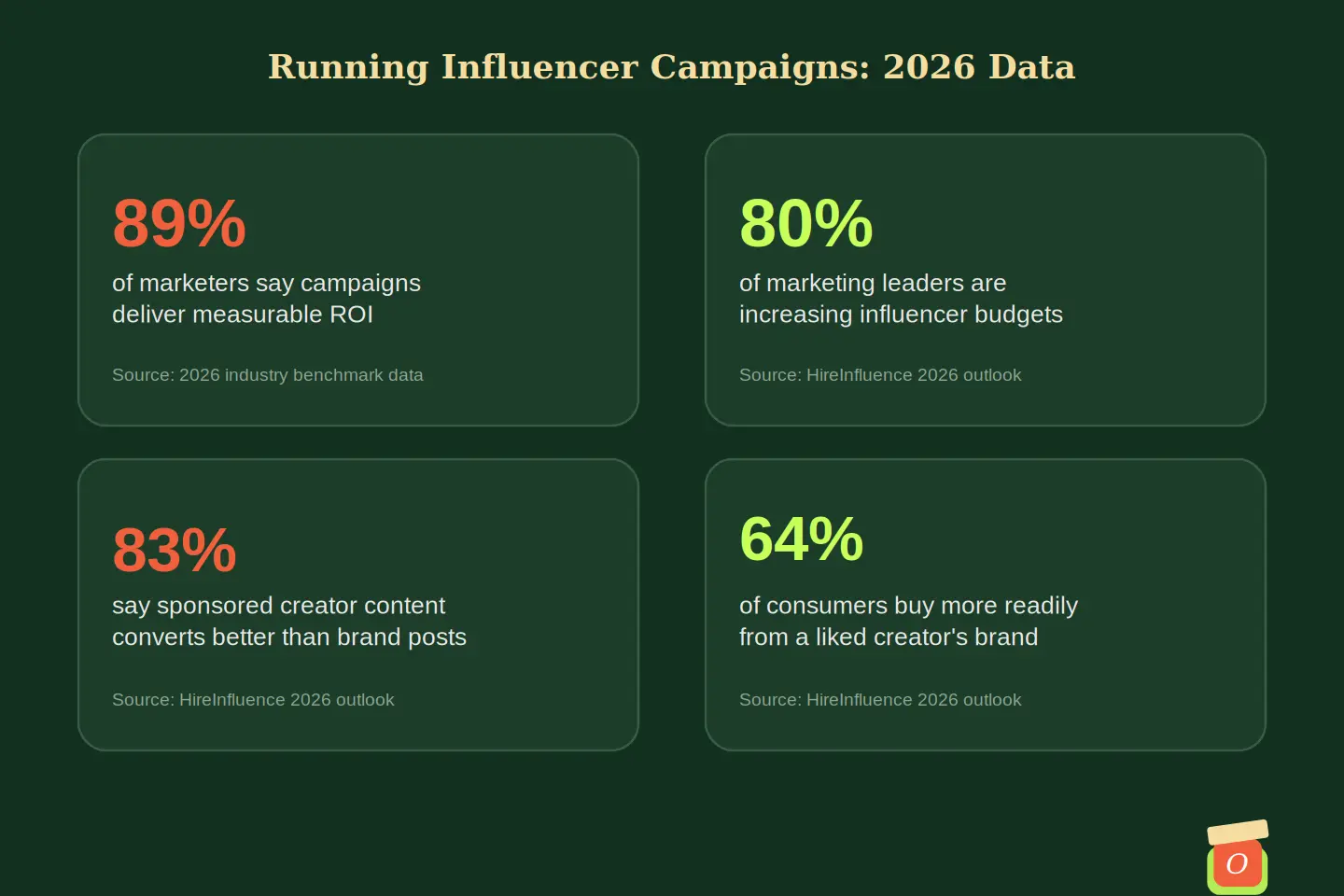
Roughly 80 percent of marketing leaders are increasing their influencer budgets in 2026, and 89 percent of marketers say these campaigns deliver measurable ROI. Yet ask any marketing team how their last campaign actually went, and you will often hear a much messier story: late drafts, a rate negotiation that dragged on for two weeks, a payment dispute, and a report nobody finished. The gap between those confident industry numbers and the chaos on the ground almost always comes down to one thing. Most brands have never written down how to run an influencer campaign as a repeatable process.
This guide breaks the process into six clear stages, from writing the brief through final reporting, so every campaign follows the same reliable structure instead of getting reinvented from scratch each time. It also shows how Brand-O-fluence connects every one of these stages, brief, matching, acceptance, review, payment, and reporting, inside one platform. By the end, you should have a clear template you can reuse for every future campaign instead of starting from a blank page each time. If you want the business case for why this effort pays off, our guide on the benefits of influencer marketing for brands covers the ROI side in more depth.
Table of Contents
- How to Run an Influencer Campaign: What It Actually Involves
- Stage 1: Define Goals and Write the Brief
- Stage 2: Find and Match the Right Creators
- Stage 3: Creator Acceptance and Negotiation
- Stage 4: Content Review and Approval
- Stage 5: Launch, Payment, and Measurement
- Stage 6: Wrap-Up and What to Do After a Campaign Ends
- Frequently Asked Questions About How to Run an Influencer Campaign
How to Run an Influencer Campaign: What It Actually Involves
Before getting into the six stages, it helps to understand why so many campaigns stumble even when the underlying strategy is sound, since the same handful of process gaps show up across brands of every size and budget.
Campaigns Fail at the Planning Stage, Not the Content Stage
Most campaign problems trace back to a vague brief, an unclear budget, or a mismatched creator, not to the actual content a creator eventually produces. By the time a draft looks wrong, the real mistake usually happened weeks earlier during planning, when goals and expectations were never pinned down clearly enough for anyone involved to work from with confidence.
The Six Stages Every Campaign Moves Through
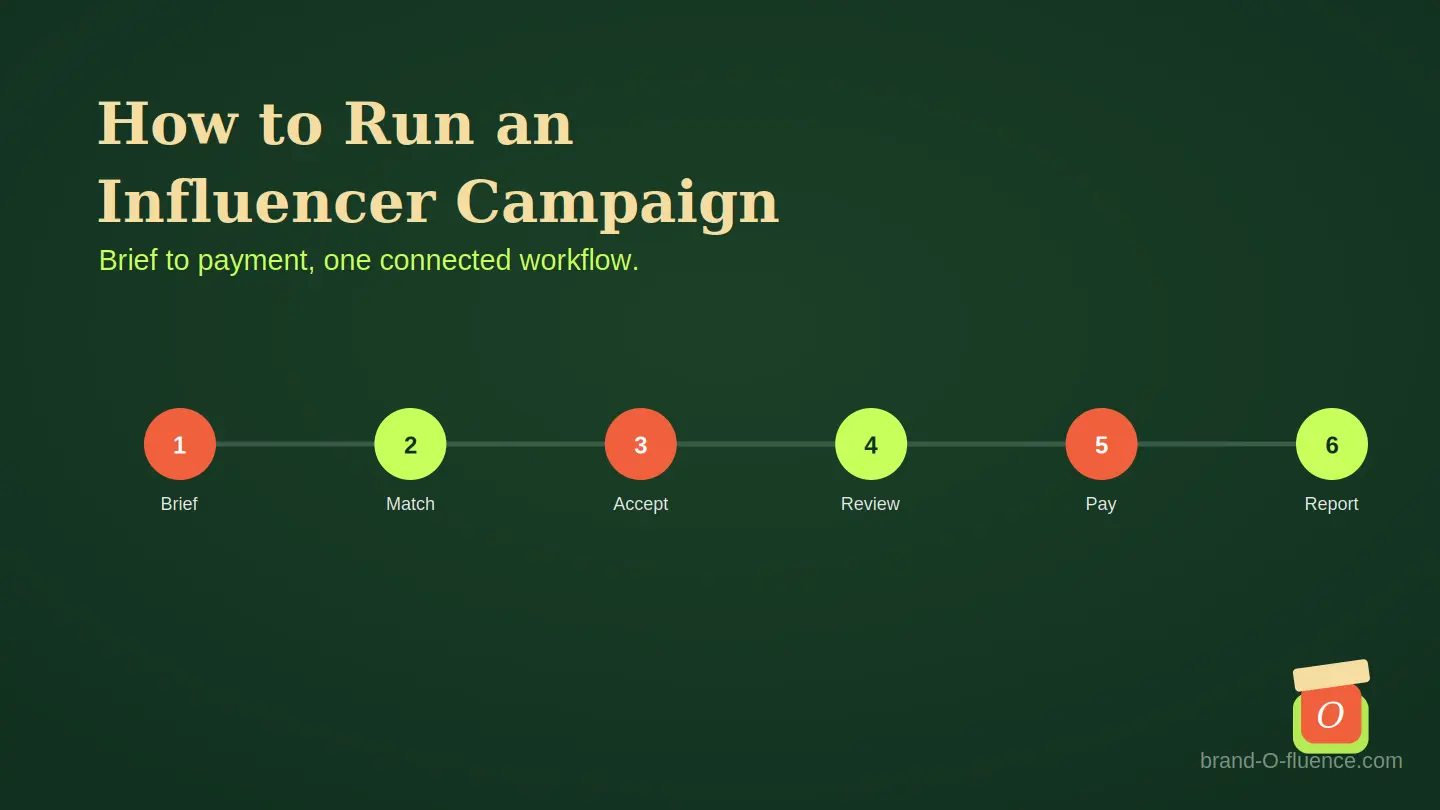
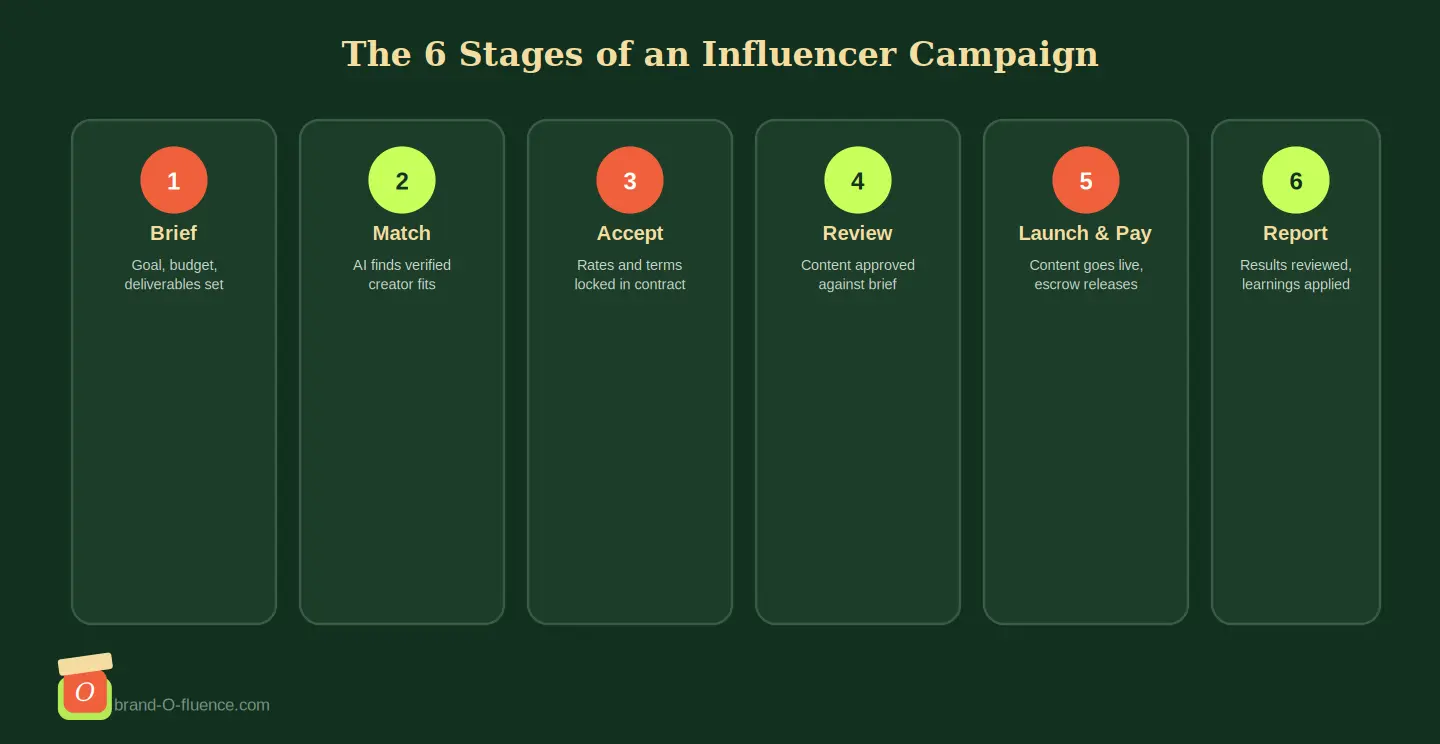
Every influencer campaign, regardless of size or budget, moves through the same six stages: briefing, creator matching, acceptance and contracting, content review, launch and payment, and final reporting. Skipping or rushing any one of these stages is where most of the friction in a campaign actually comes from.
Why a Repeatable Process Beats Reinventing Each Time
Teams that treat each campaign as a one-off project relearn the same lessons repeatedly, while teams with a documented process get faster and more consistent with every campaign they run. A repeatable structure also makes it far easier to bring new team members up to speed without losing quality along the way, since the process itself carries institutional knowledge that would otherwise live only in one person’s head.
Stage 1: Define Goals and Write the Brief
Every strong campaign starts with clarity on what success actually looks like, expressed in specific enough terms that a creator can act on it without guessing or filling in gaps with their own assumptions.
Set a Single Primary Objective
Decide upfront whether this campaign is optimizing for awareness, engagement, or direct conversions, since the right creators, content style, and even payment structure can shift depending on the answer. Trying to optimize for all three at once usually means none of them get the focus they need.
Define Budget and Creator Tier Mix
Decide how your budget splits across nano, micro, mid-tier, or larger creators before you start searching, rather than deciding creator by creator as you go. A clear tier mix upfront makes it much easier to compare candidates fairly once matching begins.
What a Strong Brief Includes
A usable brief spells out the campaign goal, key messaging points, required disclosures, content format and deliverables, deadline, and payment terms, all in one document a creator can act on without a follow-up call. Vague briefs are one of the most common reasons campaigns run over schedule, since creators end up guessing at requirements that should have been spelled out from the start.
Stage 2: Find and Match the Right Creators
With a clear brief in hand, the next stage is finding creators whose audience and content style genuinely fit what the brief describes, rather than settling for whoever happens to be easiest to reach first.
AI Matching vs Manual Search
Manual search across Instagram or YouTube can take days or weeks to produce a workable shortlist, while AI-assisted matching can surface relevant, verified creators in minutes based on niche, city, platform, and audience data. Manual search still has a place for highly specialized or unusual campaigns, but it rarely scales beyond one or two campaigns a year for most in-house teams.
Verifying Fit Before Outreach
Before reaching out to any creator, confirm their audience demographics, engagement quality, and content style actually match your brief, rather than relying on follower count alone. Our detailed guide on how to choose the perfect influencer for your brand walks through the specific criteria worth checking at this stage.
Building a Realistic Shortlist
Aim for a shortlist of 8 to 12 creators rather than reaching out to dozens at once, since a focused list is easier to manage through negotiation and keeps your team from spreading attention too thin. Expect a handful of creators on any shortlist to decline or be unavailable, so build in some buffer rather than shortlisting only the exact number you need.
Stage 3: Creator Acceptance and Negotiation
Once a creator expresses interest, this stage locks in the specific terms both sides will be held to for the rest of the campaign, turning a verbal agreement into something enforceable if anything goes wrong later.
Setting Clear Deliverables and Timelines
Confirm exactly how many posts, stories, or videos a creator will produce, in what format, and by what date, before any content gets filmed. Ambiguity here is one of the most common sources of disputes later in the campaign, especially around usage rights and how long content needs to stay live on a creator’s profile.
Negotiating Rates Fairly
Base rate discussions on a creator’s verified engagement and audience data rather than their asking price alone, and be transparent about your budget range early to avoid wasting time on offers that were never going to work. Fair, data-backed negotiation also tends to build stronger long-term relationships with creators worth working with again.
Locking in Terms Through Contracts
Put every agreed deliverable, deadline, payment amount, and usage right into a written contract before any content production begins. This step also creates the paper trail needed if a dispute arises later, protecting both the brand and the creator equally.
Stage 4: Content Review and Approval
Content review is where the brief either proves its value or reveals its gaps, depending on how clearly it was written back in stage one.
Reviewing Drafts Against the Brief
Check submitted drafts directly against the original brief’s messaging points and requirements, rather than reviewing based on general impression alone. This keeps feedback specific and actionable instead of vague notes that leave a creator unsure what to actually change.
Balancing Creative Freedom With Brand Guidelines
The strongest sponsored content still sounds like the creator, not like a brand press release read aloud. Give creators room to interpret the brief in their own voice, reserving pushback for genuine misalignment with campaign goals or brand guidelines rather than minor stylistic choices.
Approving Disclosure and Compliance
Confirm that sponsored content is clearly disclosed according to platform and regional advertising standards before it goes live, not after. Skipping this check exposes both the brand and the creator to regulatory risk that a quick review could have caught in advance.
Stage 5: Launch, Payment, and Measurement
Launch day is not the finish line. It is the point where measurement and payment protection actually start to matter.
Coordinating Publish Timing
Align publish timing across multiple creators when a campaign involves several partners at once, since staggered or coordinated timing can meaningfully affect total reach and how a campaign is perceived by any single audience segment following multiple creators. Confirm exact publish windows in advance rather than leaving timing loosely agreed upon.
Releasing Escrow Payment
Release payment only once content is confirmed live and matches the agreed deliverables, using an escrow structure that protects both sides from the fraud and payment risk covered in our guide on how brands can avoid fake influencers. This single step removes a significant share of the trust problems that otherwise complicate creator relationships.
Tracking Performance in Real Time
Monitor reach, engagement, and any conversion metrics from the moment content goes live rather than waiting until the campaign fully wraps up. Our guide on why influencer analytics matter covers exactly which metrics deserve the closest attention during this stage.
Stage 6: Wrap-Up and What to Do After a Campaign Ends
The final stage is where most of the long-term value of a campaign either gets captured or quietly lost, depending on whether anyone actually takes the time to review and document what happened.
Compiling a Performance Report
Summarize verified reach, engagement, and conversion metrics against the original goal set in stage one, so stakeholders can see clearly whether the campaign delivered what it set out to. This report also becomes the baseline your next campaign gets measured against.
Deciding Which Creators to Rehire
Identify which creators outperformed expectations and are worth prioritizing for future campaigns, building toward longer-term relationships rather than treating every campaign as a fresh start with new, unproven partners. Repeat relationships also tend to move faster through negotiation, since trust and rates are already established.
Turning Learnings Into Your Next Brief
Feed specific findings, which creator tiers performed best, which messaging resonated, which deliverables underdelivered, directly into the brief for your next campaign. This is what actually turns a single campaign into a compounding, improving process rather than a series of disconnected efforts.
Manual Process vs Brand-O-fluence Managed Workflow
The table below compares running a campaign manually against managing the same six stages through Brand-O-fluence.
| Stage | Manual Process | Brand-O-fluence Workflow |
|---|---|---|
| Brief and Planning | Scattered docs and email threads | Structured brief template in-platform |
| Creator Matching | Manual search, days to weeks | AI matching, minutes to hours |
| Acceptance and Contracts | Separate contract tools and DMs | Built-in negotiation and contracts |
| Content Review | Email attachments, no version history | Centralized review and approval |
| Payment | Manual bank transfer, no protection | Escrow-protected release |
| Reporting | Manually compiled spreadsheets | Verified analytics dashboard |
Consider a Chennai-based D2C food brand launching a new snack line under a tight, festival-season deadline. Using a written brief and Brand-O-fluence’s matching tools, the team went from campaign kickoff to a confirmed shortlist of six creators within two days, a timeline that would have been difficult to hit through manual outreach alone. Contracts and rate negotiation wrapped within the following week, content was reviewed and approved against the brief in a few rounds of feedback, and all six creators published within a two-day launch window. Escrow payments released as each piece of content was confirmed live, and a full performance report was ready within 48 hours of the campaign ending, giving the team enough time to lock in two of the six creators for a follow-up campaign the same month.
Frequently Asked Questions About How to Run an Influencer Campaign
How long does it take to run a full influencer campaign?
A well-organized campaign can move from brief to published content in one to two weeks when using AI-assisted matching and a clear brief from the start. Manual processes without a structured platform often stretch to three or four weeks due to slower creator discovery and negotiation. Timeline mostly depends on how quickly creators respond and how clear the initial brief is.
What should be included in every influencer campaign brief?
A complete brief includes the campaign goal, key messaging points, required disclosures, exact content deliverables and format, deadlines, and payment terms. Leaving any of these vague is one of the most common causes of delays and disputes later in a campaign. Treat the brief as the single source of truth both sides can refer back to throughout the process.
How many creators should a typical campaign include?
This depends heavily on budget and goals, but a mix of several nano or micro creators alongside one or two larger accounts often performs better than a single large placement. A shortlist of 8 to 12 candidates usually narrows down to 3 to 6 confirmed creators after negotiation. Diversifying creator size also spreads risk across the campaign rather than depending on one partnership working out.
When should payment be released to a creator?
Payment should release only after content is confirmed live and matches the agreed deliverables, ideally through an escrow structure that protects both the brand and the creator. Paying entirely upfront exposes brands to the risk of a creator never delivering, while paying only after everything is done can feel risky to creators as well. Milestone-based or escrow payments balance this fairly for both sides.
What is the biggest mistake brands make when running a campaign?
Writing a vague brief is consistently one of the most common and costly mistakes, since it leads to mismatched creators, content that misses the point, and confusion during review that could have been avoided entirely. Skipping performance tracking until the very end of a campaign is a close second, since it removes any chance to adjust course while it still matters. Both mistakes trace back to treating campaign management as an afterthought rather than a defined process.
Learning how to run an influencer campaign well comes down to treating it as a repeatable six-stage process rather than a series of improvised decisions. A clear brief sets the foundation, verified creator matching finds the right fit, fair contracts and escrow payments protect both sides, and consistent measurement turns each campaign into a lesson for the next one. Brands that build this structure into how they work consistently spend their budgets more efficiently than those reinventing the process every time, and they spend far less time firefighting problems a clearer process would have prevented in the first place.
If you want every stage of this process connected in one place, explore Brand-O-fluence today. Brief, AI-assisted matching, contracts, content review, escrow payments, and performance reporting all live inside a single workflow, so nothing falls through the cracks between stages. Whether you are running your first campaign or your fiftieth, the same structured process applies every time. Start running your next influencer campaign on Brand-O-fluence and see how much faster the entire process moves when every stage is connected.
Leave a Reply